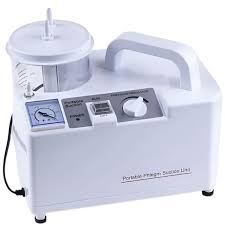
SUCTION DEVICE
A suction device, also known as an aspirator, is a medical vacuum used to clear a patient’s airway of blood, saliva, mucus, or other secretions that might obstruct breathing. The device works by creating negative pressure through a flexible catheter or tip, drawing fluids into a collection canister for safe disposal. These units are critical in both emergency and routine care, ranging from heavy-duty wall-mounted systems in operating rooms to portable battery-operated models for use in ambulances or at home. Beyond airway management, specialized suction units are also used during surgical procedures to clear the operative field or for wound drainage to promote faster healing.
Description
Suction Device
A suction device is a medical apparatus used to remove secretions such as mucus, blood,
saliva, or vomitus from a patient’s airway or surgical field. It helps maintain a clear
airway, prevent aspiration, and provide a clean operative environment during medical
procedures.
Purpose of a Suction Device
- Clear airway obstructions caused by secretions
- Prevent aspiration in unconscious or critically ill patients
- Maintain a clear surgical field during procedures
- Assist in respiratory care and emergency situations
Principle of Operation
The suction device operates by creating negative pressure (vacuum) through an electric or
manual pump. This vacuum draws fluids from the patient through a suction catheter and
collects them into a collection jar for safe disposal.
Main Components
| Component | Function |
|---|---|
| Vacuum Pump | Generates negative pressure for suction |
| Collection Jar / Canister | Collects aspirated fluids |
| Suction Tubing | Connects catheter to the collection jar |
| Suction Catheter / Yankauer Tip | Inserted into airway or surgical site to remove fluids |
| Pressure Regulator and Gauge | Controls and displays suction pressure |
Types of Suction Devices
- Portable electric suction machines
- Wall-mounted central suction systems
- Manual (foot-operated or hand-operated) suction devices
Clinical Applications
- Airway clearance in ICU and emergency settings
- During surgeries and dental procedures
- Tracheostomy and endotracheal tube care
- Post-operative respiratory care
Advantages
- Essential for airway management
- Portable and easy to operate
- Adjustable suction pressure
- Improves patient safety and comfort
Limitations
- Requires regular cleaning and maintenance
- Risk of cross-contamination if not properly disinfected
- Dependence on power supply for electric models
Conclusion
A suction device is a critical piece of medical equipment used across various healthcare
settings for airway management and surgical support. Its ability to effectively remove
secretions plays a vital role in patient safety and clinical care.