SLEEP STUDY LEVEL 3
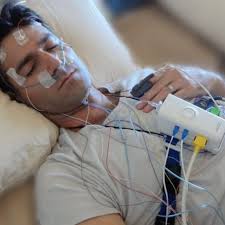
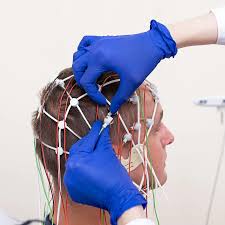
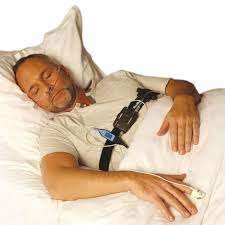
A Level 3 sleep study, also known as a Home Sleep Apnea Test (HSAT), is a portable diagnostic tool used to screen for obstructive sleep apnea (OSA) in the comfort of a patient’s own bedroom. Unlike more comprehensive Level 1 laboratory studies, this simplified test focuses primarily on respiratory parameters rather than brain activity (EEG) or sleep stages. It typically records four to seven channels of data, including airflow through a nasal cannula, respiratory effort via chest and abdominal belts, oxygen saturation (SpO2), and heart rate. While highly effective and cost-efficient for patients with a high probability of moderate-to-severe OSA, it is not suitable for diagnosing complex sleep disorders like narcolepsy or periodic limb movement disorder, as it cannot distinguish between wakefulness and sleep.
Description
Sleep Study Level 3 (Type III Portable Monitoring)
A Level 3 sleep study, also known as Type III portable monitoring, is an unattended home sleep apnea
test (HSAT) used primarily to diagnose obstructive sleep apnea (OSA). Unlike full in-lab polysomnography,
this study is performed at the patient’s home using a compact recording device that measures limited but
essential respiratory parameters during sleep.
Purpose of Level 3 Sleep Study
- Screening and diagnosis of obstructive sleep apnea
- Assessment of snoring and breathing disturbances during sleep
- Convenient and cost-effective alternative to in-lab PSG for selected patients
Parameters Monitored
| Parameter | Purpose |
|---|---|
| Airflow (nasal cannula/pressure transducer) | Detect apneas and hypopneas |
| Respiratory Effort (chest/abdominal belts) | Differentiate obstructive vs central events |
| Pulse Oximetry (SpO₂) | Monitor oxygen desaturation |
| Heart Rate | Assess cardiac response to events |
| Body Position / Snoring (optional) | Evaluate positional OSA and snoring intensity |
Components of the Device
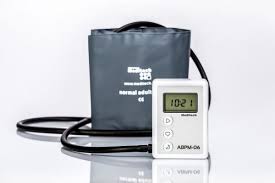
- Portable recording unit
- Nasal cannula or airflow sensor
- Respiratory effort belts
- Finger pulse oximeter probe
- Connecting cables and straps
Procedure
- Patient is instructed on how to apply sensors at home
- Device records data overnight during natural sleep
- Data is retrieved and analyzed using specialized software
Data Analysis and Reporting
- Apnea-Hypopnea Index (AHI) estimation
- Oxygen Desaturation Index (ODI)
- Snoring and positional analysis
- Identification of obstructive respiratory events
Indications
- Patients with high pre-test probability of moderate to severe OSA
- Patients unable to attend in-lab sleep study
- Follow-up assessment after treatment initiation
Advantages
- Convenient home-based testing
- Lower cost compared to PSG
- More natural sleep environment
Limitations
- No measurement of sleep stages (no EEG)
- Cannot accurately diagnose other sleep disorders
- May underestimate severity due to estimation of sleep time
Conclusion
A Level 3 sleep study is an effective, patient-friendly tool for diagnosing obstructive sleep apnea
in appropriate candidates. While it does not replace full polysomnography, it plays an important role
in accessible and efficient sleep disorder evaluation.