Ambulatory Blood Pressure Monitoring (ABPM)
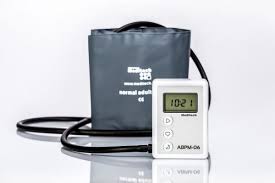
Ambulatory Blood Pressure Monitoring (ABPM) is a diagnostic technique that continuously records blood pressure at regular intervals—typically every 15 to 30 minutes during the day and every 30 to 60 minutes at night—over a 24-hour period. By using a portable monitor worn on a belt and connected to an inflatable arm cuff, this method captures real-life data as patients go about their normal daily activities and sleep. It is considered the gold standard for diagnosing hypertension because it eliminates “white coat hypertension” (elevated readings caused by clinic anxiety) and detects “masked hypertension” (normal clinic readings despite high out-of-office levels). Furthermore, ABPM provides critical insights into nocturnal dipping patterns—the natural drop in blood pressure during sleep—which is a key predictor of cardiovascular risk. Healthcare providers use this comprehensive data to evaluate treatment efficacy, manage resistant hypertension, and tailor medication schedules to a patient’s specific circadian rhythm
Description
Ambulatory Blood Pressure Monitoring (ABPM)
Ambulatory Blood Pressure Monitoring (ABPM) is a non-invasive diagnostic method that measures a patient’s
blood pressure at regular intervals over 24 hours while they perform normal daily activities and during sleep.
It provides a comprehensive assessment of blood pressure variability, circadian patterns, and true blood
pressure status outside the clinical setting.
Purpose of ABPM
- Confirm diagnosis of hypertension
- Detect white coat hypertension and masked hypertension
- Assess blood pressure variability over 24 hours
- Evaluate effectiveness of antihypertensive therapy
- Study nocturnal blood pressure patterns (dipping/non-dipping)
Components of an ABPM Device
| Component | Function |
|---|---|
| Inflatable BP Cuff | Wrapped around the upper arm to measure blood pressure |
| Portable Monitor Unit | Records BP readings and stores data |
| Air Pump and Valve System | Inflates and deflates the cuff automatically |
| Data Storage and Software | Transfers readings to computer for analysis and reporting |
Measurement Protocol
- BP measurements every 15–30 minutes during daytime
- BP measurements every 30–60 minutes during nighttime sleep
- Patient continues routine daily activities
- Patient maintains a diary of activities and sleep times
Parameters Analyzed
- Average daytime blood pressure
- Average nighttime blood pressure
- 24-hour average blood pressure
- Blood pressure load and variability
- Nocturnal dipping status
- Morning surge in blood pressure
Interpretation of Results
| ABPM Average | Interpretation |
|---|---|
| < 130/80 mmHg (24-hour) | Normal blood pressure |
| ≥ 130/80 mmHg (24-hour) | Hypertension |
| Nighttime BP not reduced by 10–20% | Non-dipper pattern (higher cardiovascular risk) |
of situational stress and provides real-world blood pressure data.
Clinical Applications
- Diagnosis and classification of hypertension
- Evaluation of resistant hypertension
- Assessment of hypotensive episodes
- Monitoring treatment response
- Risk assessment for cardiovascular disease
Advantages
- More accurate than single clinic readings
- Identifies white coat and masked hypertension
- Provides nocturnal BP data
- Improves treatment decisions
Limitations
- May cause sleep disturbance
- Discomfort due to repeated cuff inflation
- Requires patient cooperation
Conclusion
Ambulatory Blood Pressure Monitoring is an essential diagnostic tool for accurate assessment of blood
pressure patterns. Its ability to provide 24-hour data makes it invaluable for diagnosing and managing
hypertension effectively.