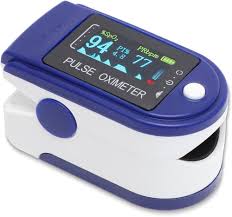
Description
Pulse Oximeter
A pulse oximeter is a non-invasive medical device used to measure arterial oxygen saturation (SpO₂) and pulse rate.
It provides rapid, continuous monitoring of a patient’s oxygenation status by analyzing light absorption through
pulsatile blood flow, typically at a peripheral site such as a fingertip, toe, or earlobe.
Principle of Operation
Pulse oximetry is based on the principles of spectrophotometry and photoplethysmography. The device emits two
wavelengths of light—red (approximately 660 nm) and infrared (approximately 940 nm)—through vascular tissue.
Oxygenated hemoglobin (HbO₂) and deoxygenated hemoglobin (Hb) absorb these wavelengths differently. By measuring
the changing absorption during pulsatile arterial flow, the device calculates oxygen saturation.
Main Components
| Component | Function |
|---|---|
| Light Emitting Diodes (LEDs) | Emit red and infrared light through tissue |
| Photodetector | Receives transmitted light and converts it to electrical signals |
| Microprocessor | Analyzes signals and calculates SpO₂ and pulse rate |
| Display Screen | Shows SpO₂, pulse rate, and waveform (plethysmograph) |
| Probe/Sensor | Placement site for measurement (finger, toe, ear, etc.) |
Parameters Measured
- SpO₂ (Peripheral Oxygen Saturation): Percentage of oxygenated hemoglobin in arterial blood
- Pulse Rate: Heart rate derived from pulsatile blood flow
- Plethysmographic Waveform: Visual representation of blood volume changes
Types of Pulse Oximeters
- Fingertip portable pulse oximeters
- Handheld pulse oximeters with external probes
- Bedside or multiparameter monitor-integrated oximeters
- Wearable or continuous monitoring oximeters
Clinical Applications
- Monitoring patients with respiratory disorders (e.g., COPD, asthma, OSA)
- Perioperative and post-anesthesia monitoring
- Intensive care and emergency settings
- Home monitoring for chronic respiratory conditions
- Assessment during sleep studies and CPAP titration
Normal and Abnormal Values
| SpO₂ Value | Interpretation |
|---|---|
| 95–100% | Normal oxygen saturation |
| 90–94% | Mild hypoxemia |
| < 90% | Significant hypoxemia (requires medical attention) |
can affect the accuracy of readings.
Advantages
- Non-invasive and painless
- Provides immediate results
- Continuous real-time monitoring
- Portable and easy to use
Limitations
- Does not measure carbon dioxide levels
- Accuracy reduced in low perfusion states
- Cannot distinguish abnormal hemoglobin types accurately
Conclusion
The pulse oximeter is an essential monitoring tool in modern clinical practice, providing vital information about
a patient’s oxygenation status. Its ease of use and reliability make it indispensable in both hospital and home settings.