
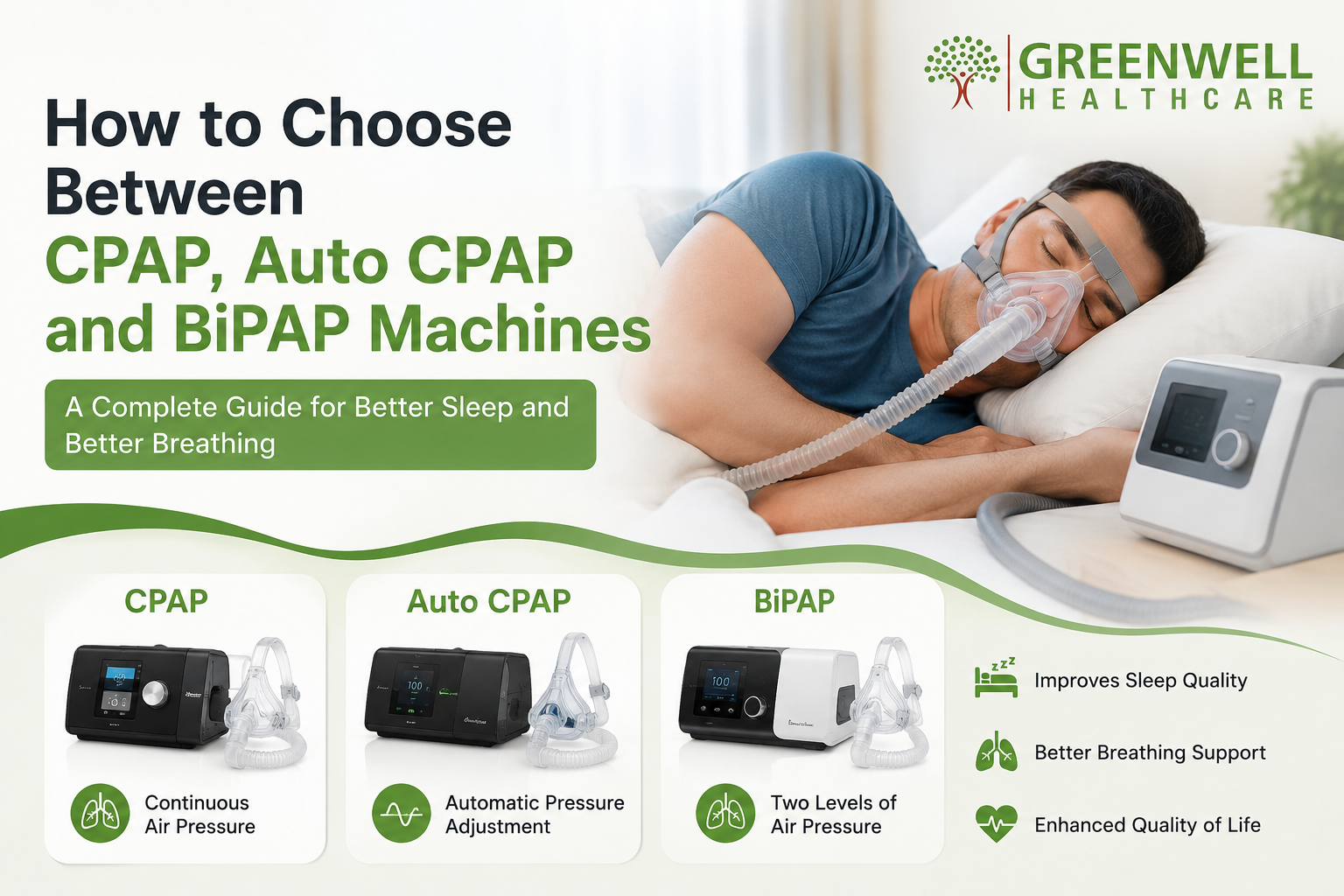
Choosing the right CPAP, Auto CPAP or BiPAP machine can feel confusing, especially when several devices appear to offer similar benefits. However, these machines use different pressure-delivery methods and are intended for different therapy needs.
The right choice depends on your diagnosis, prescribed therapy, breathing pattern, comfort requirements and guidance from a qualified healthcare professional. GreenWell Healthcare offers a range of sleep-apnea and respiratory-care devices, including CPAP, Auto CPAP and BiPAP machines.
What Is the Difference Between CPAP, Auto CPAP and BiPAP?
The simplest way to understand these three devices is by looking at how they deliver air pressure:
| Machine | How It Works | Common Use |
| CPAP | Delivers one continuous pressure | Obstructive sleep apnea |
| Auto CPAP (APAP) | Automatically adjusts pressure during sleep | OSA when pressure requirements vary |
| BiPAP | Provides separate inhalation and exhalation pressures | Patients requiring more advanced respiratory support |
Understanding these differences can help you discuss the most appropriate option with your doctor.
1. CPAP Machine
A CPAP machine delivers a continuous level of positive airway pressure through a mask while you sleep. This pressure helps keep the upper airway open and reduces breathing interruptions associated with obstructive sleep apnea.
CPAP is generally considered a straightforward PAP therapy option and may be recommended when a consistent pressure level is appropriate.
CPAP May Be Considered When:
- You have diagnosed obstructive sleep apnea.
- A consistent pressure level is appropriate.
- You can comfortably exhale against the prescribed pressure.
- Your healthcare professional recommends standard CPAP therapy.
2. Auto CPAP or APAP Machine
An Auto CPAP, also called APAP, can automatically adjust pressure within a prescribed range based on changes in breathing during sleep. GreenWell Healthcare’s Auto CPAP devices include models with automatic pressure adjustment and therapy-data monitoring features.
This can be useful when pressure requirements vary throughout the night.
Auto CPAP May Be Considered When:
- Your pressure requirements fluctuate during sleep.
- Your doctor recommends an auto-adjusting PAP device.
- You want a device that can respond to changes in breathing patterns.
- Therapy data and comfort features are important considerations.
However, automatic adjustment does not mean the machine should be self-programmed without professional guidance.
3. BiPAP Machine
A BiPAP, or bilevel positive airway pressure machine, delivers two different pressure levels: a higher pressure during inhalation (IPAP) and a lower pressure during exhalation (EPAP).
The lower expiratory pressure can make breathing out against therapy easier for some patients. BiPAP may be used in certain complex respiratory conditions and when CPAP is insufficient or poorly tolerated.
BiPAP May Be Considered When:
- Two pressure levels are clinically required.
- Exhaling against continuous pressure is difficult.
- Additional ventilatory support is needed.
- A healthcare professional recommends bilevel therapy.
CPAP vs Auto CPAP vs BiPAP: Which One Is Right?
There is no single machine that is best for everyone. Your diagnosis and prescribed therapy should be the starting point.
Consider these factors before selecting a device:
1. Your Diagnosis
Obstructive sleep apnea, central sleep apnea and other respiratory conditions can require different approaches. A sleep study or clinical assessment can help determine the appropriate therapy.
2. Prescribed Pressure
Your healthcare professional may recommend a specific pressure or pressure range. Do not change therapy settings simply because another machine appears more comfortable or powerful.
3. Comfort
Mask fit, air pressure, humidification and noise can affect your ability to use PAP therapy consistently. GreenWell Healthcare provides CPAP and BiPAP equipment along with accessories and support.
4. Features and Data Tracking
Modern devices may offer features such as heated humidification, ramp functions, SD-card data recording, automatic pressure adjustment and therapy monitoring. For example, GreenWell’s BMC G3 Auto CPAP includes features such as auto-ramp, humidification, therapy-data access and leak alerts.
5. Professional Guidance
The machine should be selected according to your medical requirements rather than simply its price or number of features. A healthcare professional can determine which therapy is appropriate for your condition.
How GreenWell Healthcare Can Help
GreenWell Healthcare provides sleep-apnea products including CPAP, Auto CPAP and BiPAP machines, along with masks, accessories and technical support. The company also provides product guidance and setup assistance for selected devices.
When comparing machines, consider the therapy requirement, device features, mask compatibility, warranty, servicing and availability of replacement accessories—not just the purchase price.
Conclusion
Choosing between CPAP, Auto CPAP and BiPAP machines depends primarily on your diagnosis, prescribed pressure requirements and individual therapy needs. CPAP provides continuous pressure, Auto CPAP can adjust pressure within a prescribed range, while BiPAP delivers separate pressures for inhalation and exhalation.
Before purchasing a machine, consult your doctor or sleep specialist and compare the device’s features, comfort, support and after-sales service. With the right equipment and consistent professional guidance, PAP therapy can become an important part of managing sleep-related breathing disorders.
Looking for the right sleep-apnea device? Explore the CPAP, Auto CPAP and BiPAP solutions available from GreenWell Healthcare and speak with the team about your equipment requirements.
Frequently Asked Questions
1. What is the main difference between CPAP and Auto CPAP?
CPAP generally delivers a prescribed continuous pressure, while Auto CPAP automatically adjusts pressure within a prescribed range based on breathing patterns.
2. Is Auto CPAP better than CPAP?
Not necessarily. The appropriate device depends on your diagnosis and prescribed therapy. Auto CPAP may be useful when pressure requirements vary, but a healthcare professional should determine whether it is suitable.
3. Is BiPAP more powerful than CPAP?
BiPAP provides two pressure levels rather than one continuous pressure. It is not simply a more powerful version of CPAP; it is designed for specific clinical requirements.
4. Can I switch from CPAP to BiPAP on my own?
No. Switching PAP therapy should be discussed with a qualified healthcare professional because the appropriate device and settings depend on your medical condition and therapy requirements.
5. How do I choose the right PAP machine?
Consider your diagnosis, prescribed therapy, pressure requirements, comfort, mask compatibility, device features, warranty and after-sales support. Professional guidance should be part of the selection process.