
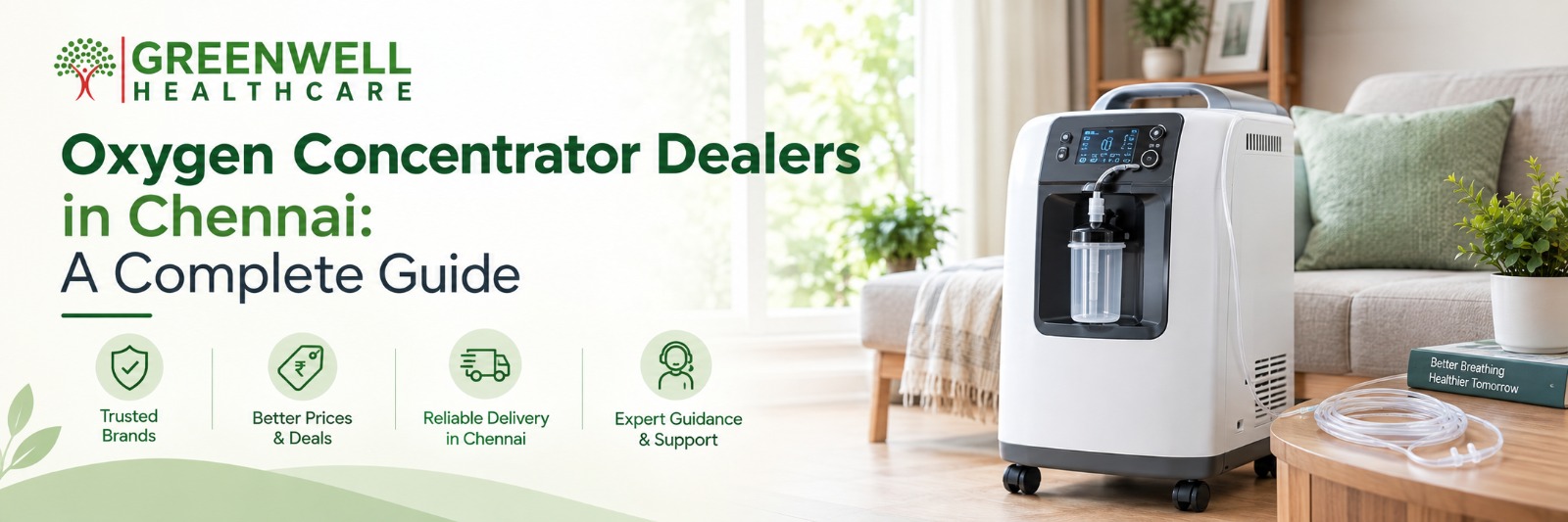
An oxygen concentrator is an important medical device used to provide supplemental oxygen to patients who require respiratory support. Unlike traditional oxygen cylinders, concentrators draw oxygen from the surrounding air, filter out nitrogen and other gases, and deliver concentrated oxygen through a nasal cannula or mask.
For hospitals, clinics, nursing facilities, home-care providers, and individual patients, choosing a dependable supplier is just as important as selecting the right device. This guide explains what to consider when looking for oxygen concentrator dealers in Chennai, including device specifications, support, maintenance, and supplier reliability.
Why Choose the Right Oxygen Concentrator Supplier?
An oxygen concentrator may be required for regular or extended use, so purchasing solely based on price can create problems later. A reliable supplier should be able to help customers understand the equipment’s specifications and provide appropriate technical assistance.
A dependable supplier can offer:
- Genuine medical equipment
- Clear product specifications
- Assistance with selecting the appropriate model
- Installation or setup guidance where applicable
- Technical support
- Maintenance and service assistance
- Availability of replacement components
- Proper documentation and warranty information
These factors can make the purchasing and ownership experience considerably easier.
Oxygen Concentrator Dealers in Chennai: What Should You Look For?
Chennai has a large healthcare ecosystem, with hospitals, diagnostic centres, clinics, home-care providers, and medical equipment businesses serving patients across the city. When comparing oxygen concentrator dealers in Chennai, buyers should look beyond the initial purchase price.
Here are some important factors to evaluate.
1. Understand the Oxygen Flow Requirement
Oxygen concentrators are available with different flow capacities. Some models are designed for lower-flow applications, while others can provide higher oxygen output.
The appropriate flow requirement should be determined by a qualified healthcare professional. Patients should not independently change prescribed oxygen flow settings.
2. Check Oxygen Concentration
The oxygen concentration delivered by a concentrator is an important specification.
When comparing different models, check the manufacturer’s stated oxygen concentration range and understand how the concentration may vary at different flow rates.
A reputable dealer should be able to explain these specifications clearly rather than simply recommending the most expensive model.
3. Consider Continuous or Intermittent Use
The intended usage pattern also matters.
A concentrator intended for frequent or continuous operation may require different features from a device used occasionally. Buyers should consider the manufacturer’s operating recommendations, duty cycle, power consumption, and maintenance requirements.
4. Look at Power Requirements
Most oxygen concentrators operate using electricity, making power requirements an important consideration.
Before purchasing, check:
- Operating voltage
- Power consumption
- Backup requirements
- Noise level
- Battery availability for portable models
- Compatibility with the intended environment
For areas where power interruptions are common, it is also useful to discuss backup options with the healthcare provider or equipment supplier.
5. Evaluate Portability
Not every patient needs the same type of oxygen concentrator.
Stationary models may be suitable for home use, while portable concentrators can be useful for people who need greater mobility, depending on their prescribed oxygen requirements.
Consider the device’s:
- Weight
- Dimensions
- Carrying options
- Battery performance
- Power options
- Intended usage conditions
6. Ask About Warranty and After-Sales Service
A medical device is a long-term investment. Even a reliable concentrator may eventually require maintenance or replacement parts.
Before purchasing, ask the dealer about:
- Warranty duration
- Service availability
- Preventive maintenance
- Replacement parts
- Technical assistance
- Service turnaround time
Strong after-sales support can be especially important for healthcare facilities that depend on equipment availability.
Stationary vs Portable Oxygen Concentrators
The two broad categories commonly considered are stationary and portable oxygen concentrators.
| Feature | Stationary Concentrator | Portable Concentrator |
| Primary use | Home or facility use | Mobility and travel |
| Size | Generally larger | Generally compact |
| Power | Usually mains powered | Battery and/or mains |
| Portability | Limited | Higher |
| Battery dependency | Usually lower | More important |
| Best suited for | Extended stationary use | Patients requiring mobility, subject to clinical suitability |
The correct option depends on the patient’s medical requirements and the recommendations of their healthcare professional.
What Questions Should You Ask a Dealer?
Before placing an order, prepare a list of questions. A professional supplier should be comfortable providing clear answers.
You can ask:
- What is the oxygen concentration at the required flow rate?
- What is the maximum flow capacity?
- Is the device intended for continuous operation?
- What is its power consumption?
- How much does the unit weigh?
- What warranty is included?
- Is technical support available?
- Are replacement parts readily available?
- How frequently does the device require maintenance?
- What accessories are included?
Getting these details in advance makes it easier to compare different models objectively.
Why Technical Support Matters
Medical equipment isn’t simply a product that can be purchased and forgotten. Users may need assistance with setup, operating procedures, maintenance, troubleshooting, or replacement components.
This is why supplier capability should be considered alongside the equipment itself.
A dealer with access to technical expertise can help customers understand the equipment and address service-related concerns more efficiently.
Choosing a Medical Equipment Supplier for Healthcare Facilities
Hospitals and healthcare organizations may have requirements that are different from individual home users.
A healthcare facility may need:
- Multiple units
- Consistent product availability
- Bulk purchasing support
- Technical assistance
- Maintenance services
- Product documentation
- Reliable delivery
- Long-term supplier relationships
For institutional buyers, evaluating the supplier’s overall healthcare distribution capabilities can therefore be just as important as comparing individual devices.
Greenwell Healthcare: Supporting Healthcare Equipment Requirements
At Greenwell Healthcare, we work to make dependable healthcare products and solutions more accessible to healthcare providers across India. Our experience in healthcare distribution and marketing allows us to support hospitals, clinics, and other healthcare organizations looking for specialized medical equipment.
We collaborate with established international manufacturers and healthcare technology companies across multiple regions, helping bring a diverse range of healthcare solutions to the Indian market.
Our approach goes beyond supplying equipment. We also focus on technical assistance and dependable service, helping healthcare providers make informed decisions and use their equipment effectively.
For organizations evaluating oxygen concentrator dealers in Chennai, factors such as product quality, technical support, availability, and long-term service should all be considered before making a purchasing decision.
How to Choose the Right Oxygen Concentrator
A simple checklist can help narrow down your options:
For Home Users
Consider:
- Doctor-recommended oxygen flow
- Required oxygen concentration
- Frequency of use
- Noise level
- Electricity consumption
- Device size
- Warranty and service
For Hospitals and Clinics
Also consider:
- Required quantity
- Equipment specifications
- Supplier capacity
- Bulk procurement options
- Technical support
- Maintenance arrangements
- Replacement parts
- Delivery timelines
The goal should be to select equipment that matches the actual clinical and operational requirements rather than choosing purely on price.
Common Mistakes to Avoid
Buying Without Understanding the Prescription
Oxygen therapy should be used according to medical advice. Do not select flow settings based solely on information found online.
Choosing Only on Price
A cheaper device may not necessarily provide the best long-term value. Consider warranty, service, reliability, and operating costs as well.
Ignoring After-Sales Support
If a device requires servicing or troubleshooting, lack of local support can become a significant inconvenience.
Not Checking Specifications
Different concentrators can have substantially different flow capacities, oxygen concentration ranges, power requirements, and portability features.
Purchasing From an Unverified Source
Always verify the supplier, product authenticity, warranty, and relevant documentation before purchasing medical equipment.
Frequently Asked Questions
What is an oxygen concentrator?
An oxygen concentrator is a medical device that takes oxygen from ambient air, concentrates it, and delivers supplemental oxygen to a patient.
How do I choose the right oxygen concentrator?
The appropriate device depends on factors such as prescribed oxygen flow, oxygen concentration requirements, usage pattern, portability, power requirements, and available support. A healthcare professional should determine the patient’s oxygen requirements.
Are portable oxygen concentrators better than stationary models?
Not necessarily. Portable and stationary concentrators serve different purposes. The appropriate option depends on the patient’s medical requirements and lifestyle.
How often does an oxygen concentrator require maintenance?
Maintenance requirements vary by manufacturer and model. Follow the manufacturer’s instructions and service recommendations for the specific device.
What should I check before buying an oxygen concentrator?
Check the device specifications, oxygen output, flow range, power consumption, warranty, service support, replacement-part availability, and supplier reputation.
Final Thoughts
Finding reliable oxygen concentrator dealers in Chennai requires more than comparing product prices. Buyers should evaluate oxygen output, flow requirements, power consumption, portability, warranty, technical support, and long-term service availability.
For patients, the first priority should always be matching the equipment to their medically prescribed oxygen requirements. For hospitals and healthcare organizations, supplier reliability and technical support are equally important.
With a focus on healthcare distribution, product quality, and technical assistance, Greenwell Healthcare supports healthcare providers seeking dependable medical equipment and specialized healthcare solutions across India.