
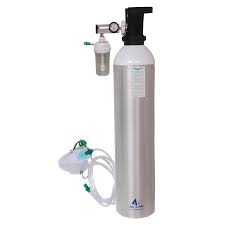
O2 CYLINDER
An O2 Cylinder is a high-pressure, seamless vessel designed for the storage and delivery of compressed medical-grade oxygen (purity ≥99%). Unlike concentrators that extract oxygen from the air, a cylinder contains a finite supply of gas, making it an essential backup or primary source for patients requiring immediate or portable respiratory support. Typically manufactured from high-strength aluminum (lightweight for portability) or mild steel (durable for stationary use), these cylinders are color-coded—often with a white shoulder or entirely green/white depending on regional standards like ISO 32—to ensure quick identification. A complete oxygen system requires a pressure regulator to reduce the high internal pressure (up to 2000+ PSI) to a safe, breathable level, and a flow meter to precisely control the liters per minute (LPM) delivered via a nasal cannula or mask. Common sizes range from small, portable “B” or “D” types used for transport to large “G” or “H” cylinders used in hospitals or as home backups. These cylinders are critical for managing emergencies, treating hypoxia, and providing life-sustaining support during power outages or device failures.
Description
Oxygen (O₂) Cylinder
An oxygen cylinder is a high-pressure metal container used for storing and transporting
medical-grade oxygen gas. It is widely used in hospitals, ambulances, clinics, and home
care settings to provide supplemental oxygen to patients with respiratory distress or
hypoxemia.
Purpose of an Oxygen Cylinder
- Provide immediate and reliable oxygen supply
- Support patients with breathing difficulties
- Serve as a backup oxygen source during power failure
- Enable oxygen delivery in transport and emergency situations
Construction and Design
Oxygen cylinders are made of seamless steel or lightweight aluminum alloys designed to
withstand very high internal pressures. They are painted in standardized colors for
identification and fitted with a valve at the top to control oxygen release.
Main Components
| Component | Function |
|---|---|
| Cylinder Body | Stores compressed oxygen at high pressure |
| Valve | Controls the release of oxygen from the cylinder |
| Pressure Regulator | Reduces high pressure to usable flow levels |
| Flow Meter | Controls and displays oxygen flow rate |
| Humidifier Bottle (Optional) | Adds moisture to oxygen before delivery |
| Oxygen Mask / Nasal Cannula | Delivers oxygen to the patient |
Working Principle
Oxygen is stored in the cylinder under high pressure (commonly 150–200 bar). When the valve
is opened, the regulator reduces the pressure to a safe level, and the flow meter allows
controlled oxygen delivery to the patient.
Types and Sizes
- Small portable cylinders (B-type, D-type) for transport and ambulances
- Medium cylinders for ward and home use
- Large cylinders (J-type) for hospital central supply systems
Clinical Applications
- Emergency and critical care oxygen therapy
- Ambulance and patient transport
- Backup oxygen supply in hospitals
- Home oxygen therapy in areas without concentrators
Advantages
- Immediate oxygen availability without electricity
- Portable and reliable
- Suitable for emergency use
Limitations
- Limited oxygen supply; requires refilling
- Heavy and requires careful handling
- Risk of high-pressure hazards if mishandled
Safety Precautions
- Do not expose to heat, sparks, or flames
- Open the valve slowly to prevent pressure shock
- Ensure proper regulator fitting to avoid leaks
- Regularly check pressure gauge and cylinder condition
Conclusion
The oxygen cylinder is a fundamental and life-saving device in medical care, ensuring
uninterrupted oxygen delivery in emergencies, transport, and backup situations. Proper
handling and maintenance are essential for safe and effective use.
Как VPN взаимодействует с брандмауэром операционной системы?