BIPAP
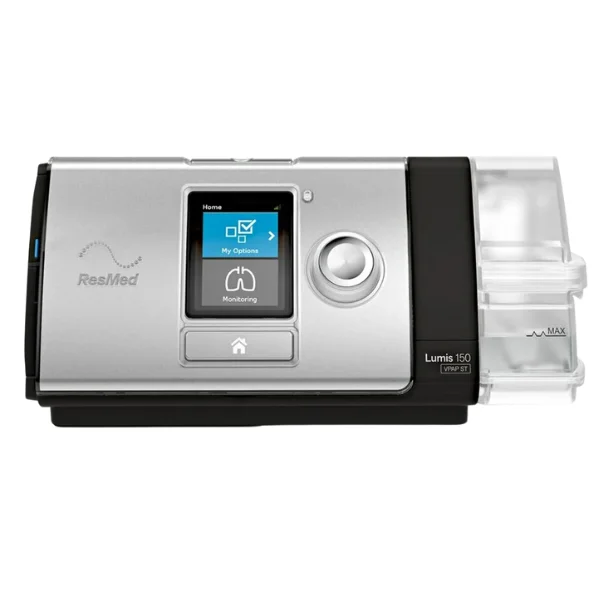
A BiPAP (Bilevel Positive Airway Pressure) machine is a non-invasive ventilation device designed to assist patients with respiratory distress, obstructive sleep apnea, or complex conditions like COPD and congestive heart failure. Unlike a standard CPAP that provides a single continuous pressure, a BiPAP uses two distinct pressure settings: IPAP (Inspiratory Positive Airway Pressure), a higher pressure to help the patient inhale, and EPAP (Expiratory Positive Airway Pressure), a lower pressure that makes it significantly easier to exhale. This “bilevel” functionality mimics natural breathing more closely and is often prescribed for patients who require higher pressure levels or struggle with the resistance of a constant air stream. Modern BiPAP units, such as those from the ResMed AirCurve or Philips DreamStation series, feature breath-timing technology, integrated humidification to prevent dryness, and smart data tracking to monitor oxygenation and respiratory events throughout the night. By reducing the work of breathing, BiPAP therapy improves sleep quality, increases daytime energy, and can prevent the need for more invasive mechanical ventilation.
Description
BiPAP (Bilevel Positive Airway Pressure)
BiPAP, or Bilevel Positive Airway Pressure, is a non-invasive ventilation (NIV) device that
delivers two different levels of air pressure to assist a patient’s breathing. It is commonly
used in the management of respiratory disorders where patients require ventilatory support
but do not need invasive mechanical ventilation.
Purpose of BiPAP
- Assist breathing in patients with respiratory distress
- Improve oxygenation and ventilation
- Reduce work of breathing
- Prevent the need for intubation in certain cases
Principle of Operation
BiPAP provides two pressure levels:
IPAP (Inspiratory Positive Airway Pressure) to support inhalation and
EPAP (Expiratory Positive Airway Pressure) to keep the airway open during
exhalation. This pressure difference assists ventilation and improves gas exchange.
Main Components
| Component | Function |
|---|---|
| Blower Unit | Generates pressurized airflow |
| Pressure Control System | Regulates IPAP and EPAP levels |
| Mask and Tubing | Delivers air to the patient |
| Humidifier (Optional) | Prevents airway dryness |
| Display Panel | Shows settings, alarms, and monitoring data |
Modes of Operation
- Spontaneous (S) Mode: Supports patient-initiated breaths
- Timed (T) Mode: Delivers breaths at a fixed rate
- Spontaneous/Timed (S/T) Mode: Combination of both
Clinical Indications
- Chronic Obstructive Pulmonary Disease (COPD)
- Obstructive Sleep Apnea (OSA)
- Respiratory failure and distress
- Neuromuscular disorders affecting breathing
- Post-operative respiratory support
Advantages
- Non-invasive ventilatory support
- Improves ventilation and oxygenation
- Reduces need for intubation
- Adjustable pressure settings
Limitations
- Patient discomfort due to mask
- Requires monitoring and proper setup
- Not suitable for unconscious or uncooperative patients
Conclusion
BiPAP is an effective non-invasive ventilation device that provides respiratory assistance
through bilevel pressure delivery. It plays a crucial role in managing various respiratory
conditions while improving patient comfort and outcomes.