CARDIAC MONITOR
Description
Cardiac Monitor
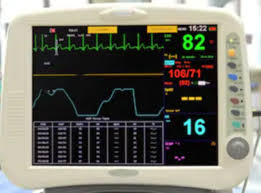
A cardiac monitor is a medical device designed to continuously observe and display the electrical
activity of the heart. It provides real-time information about heart rate, rhythm, and electrical
conduction patterns through electrocardiographic (ECG) signals, enabling early detection of cardiac
abnormalities and prompt clinical intervention.
Purpose of a Cardiac Monitor
- Continuous monitoring of heart rhythm and rate
- Early detection of arrhythmias and ischemic changes
- Monitoring during critical care, surgery, and recovery
- Assessment of cardiac function in emergency situations
Principle of Operation
Cardiac monitoring is based on recording the electrical impulses generated by the depolarization
and repolarization of cardiac muscle fibers. These signals are captured through electrodes placed
on the patient’s chest and transmitted to the monitor for waveform display and analysis.
Main Components
| Component | Function |
|---|---|
| ECG Electrodes and Leads | Detect electrical signals from the heart |
| Signal Processor | Amplifies and filters ECG signals |
| Display Screen | Shows ECG waveforms and heart rate |
| Alarm System | Alerts for abnormal rhythms and rates |
| Power Source | AC power with battery backup |
Parameters Displayed
- Heart rate (beats per minute)
- ECG waveform (P wave, QRS complex, T wave)
- Rhythm pattern and intervals
- ST segment monitoring (in advanced monitors)
Types of Cardiac Monitors
- Bedside cardiac monitors
- Portable/telemetry cardiac monitors
- Holter monitors for 24–48 hour recording
- Event recorders and implantable loop recorders
Clinical Applications
- ICU and coronary care unit monitoring
- Intraoperative cardiac surveillance
- Post-operative and recovery monitoring
- Diagnosis of arrhythmias and ischemia
- Long-term ambulatory cardiac monitoring
Advantages
- Continuous real-time cardiac assessment
- Immediate detection of life-threatening arrhythmias
- Improves patient safety
- Data storage and review capability
Limitations
- Susceptible to motion artifacts
- Requires trained interpretation
- Electrode displacement can affect readings
Conclusion
Cardiac monitors are vital tools in modern healthcare, providing continuous insight into cardiac
electrical activity. Their role in early detection of cardiac abnormalities significantly enhances
patient outcomes and safety.