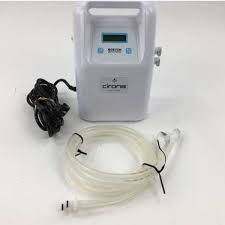
DVT PUMP
A DVT pump, also known as an intermittent pneumatic compression (IPC) device, is a medical tool designed to prevent blood clots in the deep veins of the legs, especially for patients with limited mobility due to surgery, illness, or injury. The system consists of inflatable cuffs or sleeves wrapped around the legs that rhythmically inflate and deflate to mimic the natural pumping action of muscle contractions during walking. By applying graduated pressure—often starting at the feet and moving upward—the pump enhances venous blood flow, reduces swelling, and prevents blood from pooling. This non-invasive therapy is a critical prophylactic measure used in ICUs, during post-surgical recovery, and even in home care settings to significantly lower the risk of life-threatening complications like pulmonary embolism.
Description
DVT Pump (Intermittent Pneumatic Compression Device)
A DVT pump, also known as an Intermittent Pneumatic Compression (IPC) device, is a medical
device designed to prevent Deep Vein Thrombosis (DVT) by promoting venous blood flow in the
lower limbs. It works by periodically inflating and deflating air-filled cuffs wrapped around
the patient’s legs, mimicking the natural muscle pump action that occurs during walking.
Purpose of a DVT Pump
- Prevent formation of deep vein thrombosis in immobilized patients
- Improve venous return and reduce venous stasis
- Enhance blood circulation in the lower extremities
- Reduce risk of pulmonary embolism secondary to DVT
Principle of Operation
The device uses cyclic pneumatic pressure applied through inflatable cuffs to compress the
veins of the legs. This intermittent compression increases venous blood velocity, reduces
venous pooling, and stimulates fibrinolytic activity, thereby lowering the risk of clot formation.
Main Components
| Component | Function |
|---|---|
| Control Unit (Pump) | Generates and regulates air pressure cycles |
| Inflatable Leg Cuffs (Sleeves) | Wrap around calves or full legs to apply compression |
| Air Tubing | Connects cuffs to the control unit |
| Pressure Sensors | Monitor and maintain appropriate compression levels |
Compression Cycle
- Cuffs inflate sequentially from distal (ankle) to proximal (thigh)
- Pressure is maintained for a few seconds
- Cuffs deflate to allow venous refilling
- Cycle repeats automatically at preset intervals
Clinical Indications
- Post-operative patients (especially orthopedic and abdominal surgery)
- Bedridden or immobile patients
- Patients with high risk of thromboembolism
- Contraindication to anticoagulant therapy
Advantages
- Non-invasive and painless
- Reduces risk of DVT and pulmonary embolism
- Easy to apply and operate
- Suitable for long-term preventive use
Limitations and Contraindications
- Not suitable for patients with existing DVT
- Contraindicated in severe peripheral arterial disease
- May cause discomfort if improperly fitted
Conclusion
The DVT pump is an effective preventive device widely used in hospitals to reduce the incidence
of deep vein thrombosis in at-risk patients. Its ability to simulate natural muscle activity makes
it an important tool in thromboprophylaxis.