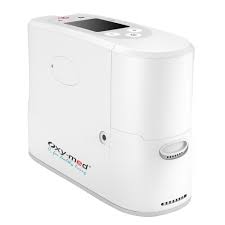
OXYGEN CONCENTRATOR (PORTABLE)
A portable oxygen concentrator (POC) is a compact, battery-operated medical device designed to provide supplemental oxygen to individuals with respiratory conditions while they are on the move. Unlike traditional oxygen tanks that store a finite amount of compressed gas, a POC works by pulling in ambient air, filtering out nitrogen, and delivering purified oxygen to the user via a nasal cannula. These devices are specifically engineered for mobility, featuring lightweight designs that can be carried in a shoulder bag or backpack, and are often FAA-approved for use during air travel. Depending on the user’s needs, a POC can deliver oxygen in pulse dose (releasing oxygen only when the user inhales) or, in some larger models, continuous flow modes. By utilizing rechargeable batteries and AC/DC power adapters, portable concentrators offer users significantly more independence and freedom to perform daily activities, travel, and exercise without the logistical burden of heavy tanks or frequent refills.
Description
Portable Oxygen Concentrator
A Portable Oxygen Concentrator (POC) is a compact, lightweight medical device that delivers
supplemental oxygen to patients with respiratory conditions. Unlike traditional oxygen
cylinders, a POC extracts oxygen from ambient air, concentrates it, and delivers it to the
patient through a nasal cannula, enabling mobility and independence.
Purpose of a Portable Oxygen Concentrator
- Provide supplemental oxygen therapy during movement and travel
- Support patients with chronic respiratory diseases such as COPD, asthma, and pulmonary fibrosis
- Improve oxygen saturation and reduce breathlessness
Principle of Operation
The POC works on the principle of Pressure Swing Adsorption (PSA). Ambient air is drawn
into the device, where nitrogen is selectively removed using zeolite molecular sieves.
The remaining concentrated oxygen is then delivered to the patient in controlled pulses
or continuous flow, depending on the model.
Main Components
| Component | Function |
|---|---|
| Air Intake Filter | Removes dust and impurities from ambient air |
| Compressor | Pressurizes incoming air |
| Zeolite Sieve Beds | Separate nitrogen from oxygen |
| Oxygen Storage Chamber | Stores concentrated oxygen before delivery |
| Control Panel and Display | Adjusts flow settings and shows device status |
| Rechargeable Battery | Provides portable power supply |
Modes of Oxygen Delivery
- Pulse Dose Mode: Delivers oxygen only during inhalation
- Continuous Flow Mode: Provides a constant flow of oxygen
Clinical Indications
- Chronic Obstructive Pulmonary Disease (COPD)
- Pulmonary fibrosis
- Severe asthma
- Post-COVID or post-pneumonia recovery
- Long-term oxygen therapy (LTOT)
Advantages
- Lightweight and easy to carry
- No need for oxygen refilling
- Battery-operated for outdoor use
- Quiet operation and user-friendly interface
Limitations
- Limited maximum flow compared to stationary concentrators
- Battery life constraints
- Requires regular charging and maintenance
Conclusion
A Portable Oxygen Concentrator is an essential device for patients requiring oxygen therapy
while maintaining an active lifestyle. Its advanced technology and portability significantly
enhance patient independence and quality of life.