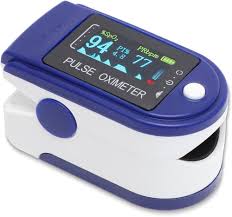
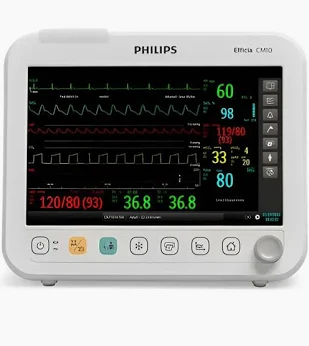
. Acting as the “electronic eyes” for medical professionals, these monitors track essential signs such as heart rate, blood pressure, oxygen saturation (SpO2), respiratory rate, and body temperature. In critical settings like Intensive Care Units (ICUs) and operating rooms, advanced multiparameter monitors provide real-time data and waveforms, including electrocardiograms (ECG) and end-tidal CO2 (EtCO2), enabling doctors to detect subtle changes in a patient’s condition immediately. The system typically consists of sensors attached to the patient, a processing unit that interprets the data, and a display screen with customizable alarm systems that alert healthcare providers if any vitals deviate from safe ranges. By providing a continuous stream of accurate health data, patient monitors are vital for early diagnosis, managing chronic conditions, and improving overall survival rates for critically ill patients.
Description
Patient Monitor
A patient monitor is an electronic medical device used to continuously measure, display, and record
vital physiological parameters of a patient. It provides real-time information about the patient’s
health status, enabling early detection of abnormalities and timely clinical intervention.
Patient monitors are widely used in intensive care units (ICU), operation theaters (OT), emergency
departments, recovery rooms, and sleep laboratories.
Primary Purpose
- Continuous observation of vital signs
- Early detection of physiological deterioration
- Alarm generation for critical values
- Data recording for clinical assessment and documentation
Common Parameters Monitored
| Parameter | Description |
|---|---|
| ECG (Electrocardiogram) | Monitors heart rhythm and rate |
| SpO₂ (Pulse Oximetry) | Measures oxygen saturation |
| NIBP / IBP | Non-invasive or invasive blood pressure monitoring |
| Respiratory Rate (RR) | Breathing frequency monitoring |
| Temperature | Core or skin temperature measurement |
| EtCO₂ (Capnography) | End-tidal carbon dioxide measurement |
Main Components
- Sensors and Probes: ECG leads, SpO₂ probe, BP cuff, temperature probe, capnography line
- Processing Unit: Converts signals into readable data
- Display Screen: Shows waveforms, numeric values, and trends
- Alarm System: Alerts for abnormal values
- Power Supply: AC power with battery backup
Display Features
- Real-time waveforms (ECG, plethysmograph, capnogram)
- Numeric vital sign values
- Trend graphs for historical data
- Customizable alarm limits
Types of Patient Monitors
- Bedside multiparameter monitors
- Portable/transport monitors
- Wearable monitors
- Central monitoring station systems
Clinical Applications
- Critical care and intensive monitoring
- Intraoperative and post-operative care
- Emergency and trauma care
- Sleep studies and respiratory monitoring
- Long-term patient observation
Advantages
- Continuous real-time assessment
- Improves patient safety
- Supports clinical decision-making
- Data storage and trend analysis
Limitations
- False alarms due to motion artifacts
- Requires trained personnel for interpretation
- Equipment dependency and maintenance needs
Conclusion
Patient monitors are indispensable in modern healthcare settings, offering comprehensive and continuous
monitoring of vital signs. Their role in early detection of clinical deterioration significantly enhances
patient safety and quality of care.