
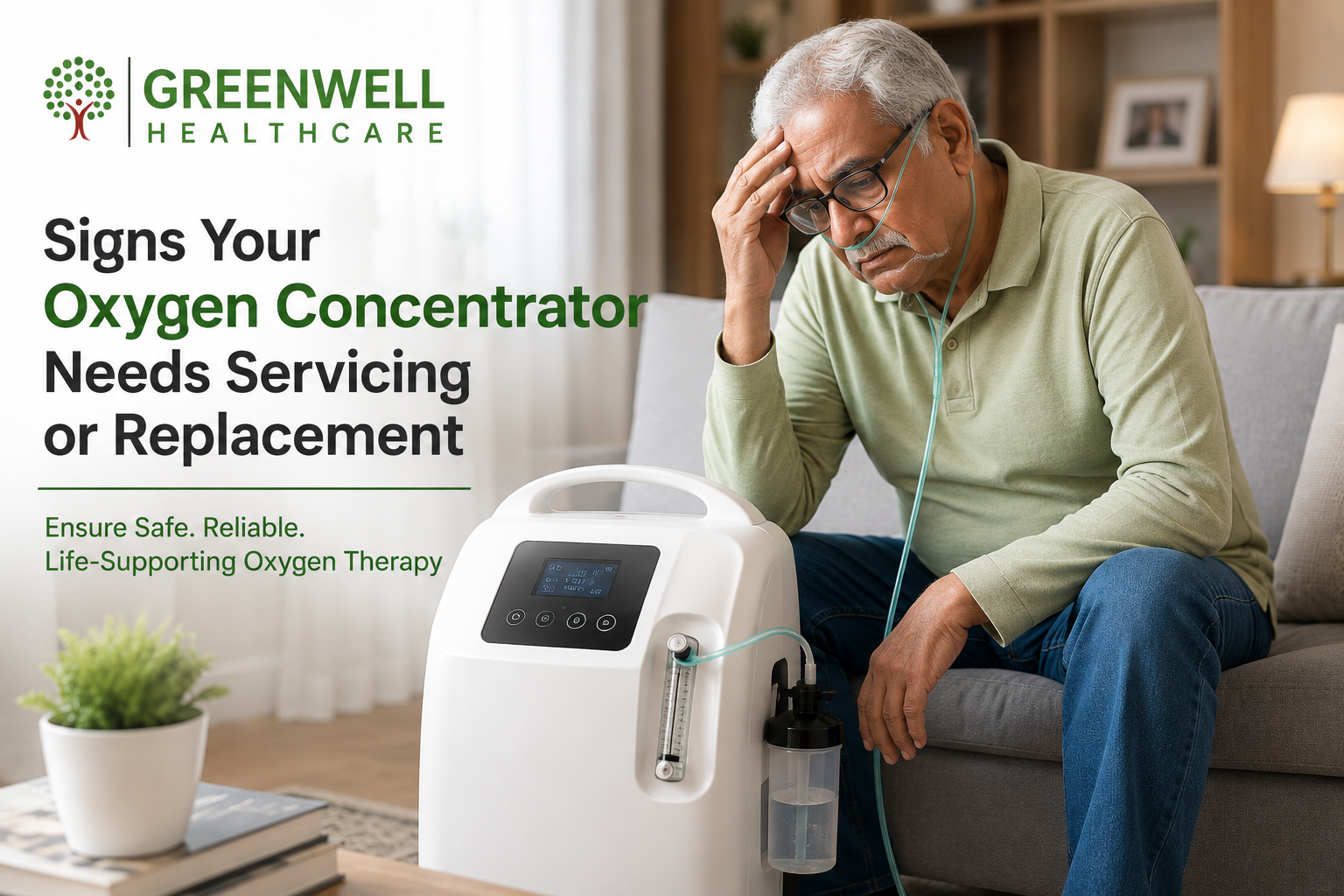
An oxygen concentrator is a vital medical device for people who require oxygen therapy due to conditions such as COPD, asthma, pulmonary fibrosis, or other respiratory disorders. Like any medical equipment, an oxygen concentrator requires regular maintenance to ensure it delivers consistent and reliable oxygen therapy. Ignoring early warning signs can reduce its performance, increase repair costs, and even affect your health.
In this guide, Greenwell Healthcare explains the common signs that indicate your oxygen concentrator may need servicing or replacement, along with tips to keep it running efficiently.
What Is an Oxygen Concentrator?
An oxygen concentrator is a medical device that extracts oxygen from the surrounding air, filters out nitrogen, and delivers concentrated oxygen to the user. It is widely used in hospitals, clinics, and home healthcare settings to support patients who need continuous or intermittent oxygen therapy.
If your oxygen concentrator is making unusual noises, delivering reduced oxygen output, displaying frequent alarms, overheating, or requiring repeated repairs, it’s time to have it serviced or consider replacing it.
Why Regular Servicing Is Important
Routine servicing helps ensure your oxygen concentrator:
- Delivers the prescribed oxygen concentration.
- Operates safely and efficiently.
- Reduces the risk of unexpected breakdowns.
- Extends the lifespan of the device.
- Supports uninterrupted oxygen therapy.
Preventive maintenance is always more cost-effective than emergency repairs.
7 Signs Your Oxygen Concentrator Needs Servicing or Replacement
1. Reduced Oxygen Output
One of the most noticeable signs is when the device no longer delivers the required oxygen flow or concentration.
You may experience:
- Increased shortness of breath
- Fatigue during normal activities
- Difficulty maintaining oxygen saturation levels
If you notice these symptoms, contact a qualified technician immediately.
2. Frequent Alarm Notifications
Modern oxygen concentrators are equipped with alarms that alert users to potential problems.
Common warning alarms include:
- Low oxygen purity
- Power failure
- High temperature
- Low airflow
- System malfunction
Ignoring repeated alarms can lead to serious equipment failure.
3. Unusual Noise or Excessive Vibration
A well-maintained oxygen concentrator operates quietly. Grinding, rattling, buzzing, or excessive vibration may indicate worn-out internal components such as the compressor or cooling fan.
Professional servicing can identify the issue before it becomes a major repair.
4. Overheating During Operation
If the concentrator becomes unusually hot after running for a short time, it may have:
- Blocked air filters
- Poor ventilation
- Cooling fan issues
- Internal component failure
Always keep the device in a well-ventilated area and clean the filters as recommended by the manufacturer.
5. Increased Power Consumption
A sudden rise in electricity usage without any change in operating hours may indicate that the concentrator is working harder than normal due to aging components or reduced efficiency.
Routine maintenance can restore optimal performance.
6. Frequent Repairs
If your oxygen concentrator requires repeated repairs within a short period, replacing the unit may be a more economical option.
Consider replacement if:
- Repair costs are increasing.
- Parts are difficult to source.
- The device is no longer under warranty.
- Performance continues to decline after servicing.
7. The Device Is More Than Five Years Old
Most oxygen concentrators are designed to provide reliable performance for several years with proper maintenance. As the device ages, internal components naturally wear out.
Older units may:
- Consume more electricity.
- Produce inconsistent oxygen concentration.
- Require more frequent maintenance.
- Lack modern safety features.
If your device is aging and experiencing multiple issues, upgrading to a newer model can improve reliability and efficiency.
Tips to Extend the Life of Your Oxygen Concentrator
Proper care can significantly increase the lifespan of your equipment.
Clean the Filters Regularly
Dirty filters restrict airflow and reduce oxygen purity. Follow the manufacturer’s cleaning schedule.
Keep the Device Well Ventilated
Place the concentrator away from walls, curtains, and heat sources to allow proper airflow.
Inspect Tubing and Accessories
Replace damaged tubing, cannulas, and humidifier bottles as needed to maintain effective oxygen delivery.
Schedule Preventive Maintenance
Annual servicing by trained professionals helps detect problems before they become costly repairs.
Use a Stable Power Supply
Power fluctuations can damage sensitive electronic components. A voltage stabilizer or surge protector can help protect your investment.
A qualified technician can assess the condition of your device and recommend the most cost-effective solution.
Why Choose Greenwell Healthcare?
At Greenwell Healthcare, we are committed to delivering dependable respiratory care solutions for hospitals, clinics, and home healthcare users. Our range of oxygen concentrators, respiratory equipment, and support services is designed to ensure reliable performance and patient comfort.
Whether you need expert guidance, routine servicing, or a replacement oxygen concentrator, our experienced team is here to help you choose the right solution for your healthcare needs.
Conclusion
Your oxygen concentrator plays a critical role in maintaining your respiratory health. Paying attention to early warning signs such as reduced oxygen output, frequent alarms, overheating, or recurring repairs can help prevent unexpected failures and ensure uninterrupted oxygen therapy.
Regular maintenance not only extends the life of your equipment but also ensures it continues to deliver safe and effective oxygen. If your device is showing signs of wear or declining performance, consult a trusted healthcare provider like Greenwell Healthcare for professional servicing or replacement options.
Frequently Asked Questions
1. How often should an oxygen concentrator be serviced?
Most oxygen concentrators should be professionally serviced at least once a year, although maintenance schedules may vary depending on the manufacturer and usage.
2. How can I tell if my oxygen concentrator is not working properly?
Common signs include low oxygen output, frequent alarms, overheating, unusual noises, and reduced airflow.
3. Can an old oxygen concentrator be repaired?
Yes, many older units can be repaired. However, if repair costs are high or the device frequently breaks down, replacement is often the better option.
4. How long does an oxygen concentrator typically last?
With proper maintenance, many oxygen concentrators provide reliable performance for several years. Regular servicing helps maximize their lifespan.
5. Does Greenwell Healthcare provide oxygen concentrator solutions?
Yes. Greenwell Healthcare offers high-quality oxygen concentrators, respiratory care equipment, and expert support to help patients and healthcare providers maintain effective oxygen therapy.